I have been thinking how to mesh TC's smarts and complexity. Indeed, this is a theme I have explored with some of this newletters readers. For example, TC's ability to create exemplary characters – like Amy Drumhill in Dynasty of Death – whom she couldn't have emulated in real life for love or money.
When I was in High School, for about eight months, because of Peggy's inability to behave coherently toward her children, my father had me live with my grandparents. That was the Fried side, not the TC side.
They were mentally stodgy, depressing people. Here they had an early teenage grandchild foisted on them, though they were well in their 80s. Living there, though, did afford a chance to see the world from another angle.
Two of these thoughts had an affect on me for much of my life. One of these gave me a desire to live larger in the world. It was also about my particular generation: neither Depression nor Baby Boomer, but a short generation not officially acknowledged in between.
Those grandparents both died at 99 (though a decade apart). Years ago I referred to that as a lease that wasn't renewed. They had come to the US through Ellis Island. I asked them questions. They had neither the intellect nor introspection to recall what had changed for them. Yes, there were facts but no insight.
Well, TC is a different (and younger) matter. Her most significant ages are super easy to remember, and calculate with: Born, 1900; had a dibilitating, career ending, stroke in 1980, and died in 1985. She would have been of High School age, in a home of immigrants – difficult though they were, as Peggy's Chapter 2 attests – who would have had a sense of what they lost and gained in living in the US during WWI.
Also, TC represents continuity between those wars. For example, her novels Dynasty of Death and "Time No Longer" are beginning thoughts on the cataclysms that inaugurated both the World Wars. I think her changes of personality represent some of the dynamisms that were adjustments to those cracks in society that required bridging after those wars.
Probably, as history flirts with increasingly these days, there is the relation between the generations of young up to early adults, following WWI and its corresponding group after WWII. I see them as terribly antagonistic, in ways that haven't been accounted.
Smart, driven and psychologically malformed, TC needed grist for her mill. At least at the start of her career, she had a reason to draw with the best of her intellect on what came from those world wars. Which she did. Later, though, she tried to manipulate the opinions of her readers, to serve her world view.
She did this knowing that she had a readership that relished her insights. An acute changed happened in her personal life when the person who had been with her through novel writing thick and thin, who cared greatly about her success – not just the money; she had none when he met her – died. That is Marcus Reback of whom I speak.
Seeing the world through TC's eyes, and especially that fracturing from the World Wars, can be a guide to a bigger picture of what is going on today. Other players, though not authors, like Fred Koch, have legacies that live on today, influencing the politics and economics of the US in many hidden ways, with many hidden agendas. I've come to suspect that TC was an author of some of those views, showing especially in her later novels.
Bright Flows the River is one of those later (indeed, the last) books: An Open Road offering at $2.99. There are also hard backs and paperbacks available.
A man who gained the world but lost his soul faces a critical midlife crisis, in a suspenseful and inspiring novel about love and forgiveness. Shifting between the past and the present, this is a story of faith, friendship, and the road not taken, in which a powerful, successful man may finally get the chance to become the person he long ago dreamed he could be.
Open Road is also offering Letter from Peking
By Pearl S. Buck $1.99 reduced from $9.99
On the birth date of Pulitzer and Nobel Prize-winning author Pearl S. Buck, read her saga about a family split apart by race and history...At the outbreak of WWII, a half-Chinese man sends his family back to America, beginning an absence punctuated only by his letters, and a son who must make sense of his mixed-race ancestry alone—from the author of The Good Earth.
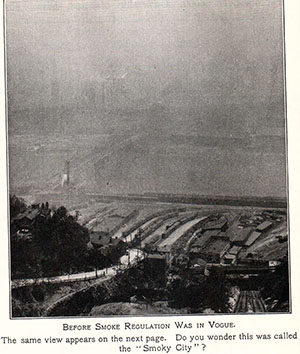
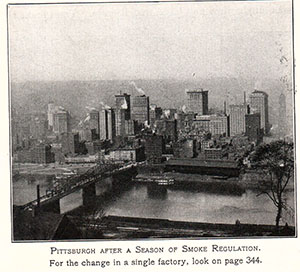
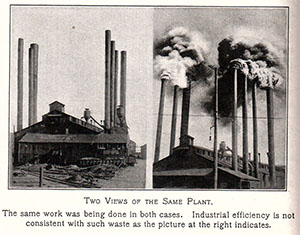
I intend to come back to this theme of the significance of the World Wars, and TC's special fit to consider them, later. I leave with one other TC offering, for which Patricia Stein has written a review: Tender Victory, a story of America following WWII, featuring one of TC's favorite subjects, religious leaders. Relevant to Patricia's review, a newspaper editor beholden to the industrialsts in his town, I note some pictures that weigh in on what TC also wrote about, legacy owners.
Legacy industrialists were often up in arms over the realization that citizens wanted to live well in America. An example was the legacy bituminous (soft; carcinogen filled) coal mines that suddenly had to compete with anthrocite (hard; residue less toxic) coal. These three images from 1917 Civics book – remember civics? – tell quite a story:
Michael Fried, Grandson
For the Descendants of Taylor Caldwell
The sign-up for the Descendants of Taylor Caldwell Newsletter: is here.