There are five Open Road promotions today. As previously I have divided them into two types. That division brings me – with our Easter preparations upon us – to the disparate positions of TC. I'll say some words on the bible and Jesus to make my point.
  1. Dynasty of Death (1939)
  2. Great Lion of God (1970)
  3. Glory and the Lightning (1974)
  1. The Devil's Advocate (1952)
  2. Dialogues with the Devil (1967)
The Gospel of Matthew defines Jesus as a “Righteous Teacher” following the tradition of Moses. Luke defines Jesus as “the Center of Time” between the Law and the Prophets and the age of the holy Spirit. And the Gospel of John defines Jesus as the divine ''God'' or ''Son of God.''  Mark, believed to be the earliest written gospel, defined Jesus as an exorcist.  Jesus spends his time casting out the oppressive demons of Rome who possess the Galilean land and the Jewish people who live on that land. 

The author of Mark makes it clear that Jesus knew such intentional opposition to Empire would lead to his execution. I must have learned this early, for I was never confused about why this good and peaceable Jesus might be crucified. Never confused, though always in trepidation as to how to contain myself as this event comes about at Easter.

Mark has no resurrection appearance like Matthew, John, or Luke.  The tomb is just……empty, as if the story of Jesus was unfinished. The young man sitting on the stone tells the women to round up the disciples and go back to Galilee.  In other words, the mission and the program of Jesus now start over again.  Death, this political execution, does not stop the movement, does not end the story.  Begin again.  Exorcise oppression and domination, heal the sick and dying laid low by their poverty, share food with one another to preserve community, and teach and preach nonviolence to counter the violence and death you see all around you.  Jesus goes ahead of you and the activity of the Empire of God continues.  The message is that simple. 

In its simplicity, it is quite dramatic, thought-provoking, knowing what we do. It isn't, though, what you hear from many of the more vehement religionists of today. Indeed, the world of religion today is divided in its preoccupations every bit as much as is the world of politics.

As often as TC brings us to Jesus in her novels, she never tackles his mission. Rather, her issue is his aura. He actually appears to Paul in Jerusalem in Great Lion of God with his mother sitting by his side. His aura, that is the point, his aura. You could be forgiven for thinking that TC actually had such a premonition. That before Paul met Jesus on the road to Damascus, he already knew Jesus. It is quintessential TC.

So, now I am ready to address a question I have pussy-footed around for some time. What did TC bring to today's conservative dialog. I see three topics pushed repeatedly in her writings, all seemingly repeated by today's most vehement conservatives.

I've spoken about the graceful women who do appear in many TC novels. Witless or worthless, those with progessive thoughts are commonly presented in her late novels as with ugly physical attributes. One of this newsletters' readers has noted a review comment that TC’s female characters...especially mothers.....always have ''fat ankles.'' Actually, this newletter reader says, they only have fat ankles, wide feet and chunky legs if they are liberals. The good conservative women have slim beautiful legs in all her novels!

This is especially interesting to me: fat ankles and chunky legs was a TC trait. She, at times, wrote of good women, but imitating them in real life was beyond her.

Mark is written just before, during, or after the Romans are leveling the holy city of Jerusalem and the holy Temple.  In the year 70 C.E., Rome was starving Jerusalem and laying siege to the city.  The Romans were crucifying upwards near 500 Jews a day, ringing the city with their crosses, as a way of robbing the inhabitants of any hope that their God was at work to save them.  And we know that Jesus did not return during that time.

  At least, in a way that would have saved faithful people from their torture, execution, and death.  Later gospel writers, like Luke, had to come to grips with this reality—wrote about the church going on in the age of the Holy Spirit. Mark knows none of that.  The author of Mark defines faithfulness as our willingness to imitate the life, ministry, and mission found within the gospel.  Indeed, we must decide what that means when the tomb is merely empty, there are no angel chorus “alleluias”, and Jesus has not returned.  That is important, because to Mark, the earliest gospel written, resurrection only happens when we return to Galilee to start Jesus’ ministry all over again.

Easter was the hope that Jesus’ death was not the end of Jesus’ vision. It was the daring thought that the triumph of his reign of love and peace might still live out there somewhere in our near or distant futures.

Rectifying TC and Mark is no easy task. Only by avoiding what is right in front of us, by declaring truth is whatever man says it is, can we accept these simplistic categories of liberal and conservative. True conservatives do seem to repeat the same phrases, and believe in taxes (as did TC) as evil manifest.

Yet, that smacks of what you get on TV political ads today that blast health care. That is Charles Koch's demand that he not have to pay taxes for all of the ways he uses the environment for his billions without paying anything for it.

Here, though, TC grew in her three themes above, for she played them out in vignettes of many novels. She had a big vision. My thesis is that it manifests, carried by The John Birch Society into the hearts of the Koch brothers and their great moneyed network, still today.

Yet, there is one topic I left out of TCs constant themes. One that more than any other other gives her dimension. Despite her preoccupations with the rabble, the mob, TC pushed the middle class as the only body that could save freedom. Was there a coherent thesis there about who was the middle class?

Certainly it was not the meek who would inherit the Earth. This seems to me the major complication in what the US deals with today: The hope for a middle class. A middle class that is exciting and attractive, enough that aspiring to it is not a trivializing enterprise, for the losers. TC clearly hoped it was spelled out in her novels. Was it?

What of the religious leaders who saw, not the middle class, but the poor as the greatest hope? Believe it or not, it was the hope of those who wanted to speak of progress, that one of their progessive goals was to elevate the poor to the middle class. Would TC have allowed that?
Michael Fried, Grandson
For the Descendants of Taylor Caldwell
Since my last newsletter, here in Colorado along the Front Range we got the heaviest snow fall I have ever been in, and I am from Buffalo. Unlike, however, Buffalo, where you can hit a golfball under a bush in late May and find it sitting atop a pile of snow bedecked with violets, each pile has long disappeared. The natives here tell me we will get more snow later in April, but today it was 73 degrees out.
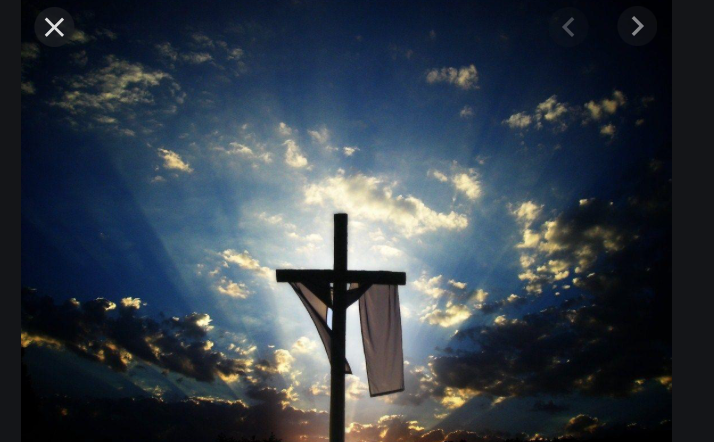
Resurrection.jpg
The sign-up for the TC-Descendants Newsletter is here.